

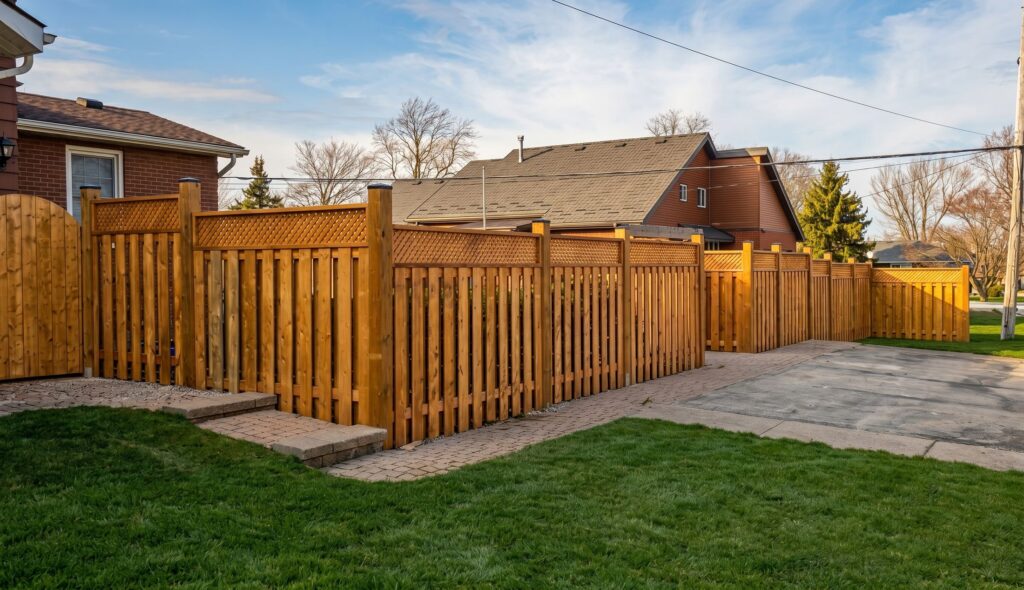
On install day, a pressure-treated fence is bright, clean and slightly green or honey-coloured. A few years later, an untreated fence is silver-grey. That’s normal, and it isn’t rot. Here’s what happens to a wood fence over time in Ontario, when to stain it, and how to bring an old fence back.
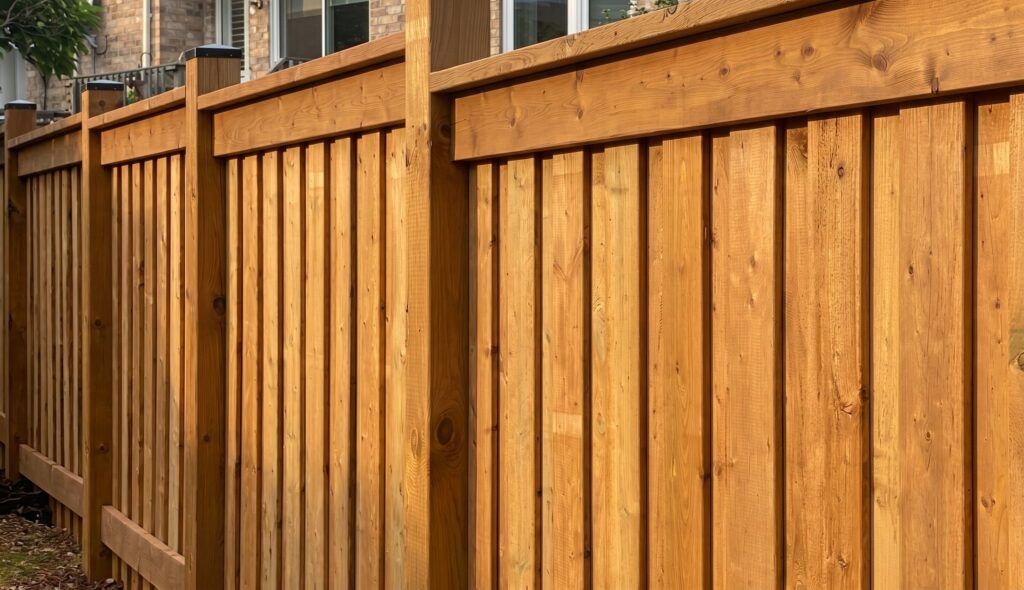
What Happens to a Wood Fence Over Time
| Age | What you’ll see (no stain) | What to do |
|---|---|---|
| Install day | Bright, even colour. The wood is still wet from treatment. | Let it dry. Don’t stain wet wood. |
| First months | Colour evens out, boards dry and may shrink slightly. | Do the water drop test (below). Stain once the wood is dry. |
| About 1 year | Sun-facing sides start to fade and grey. Small surface checks appear. | Still an easy fix: clean and stain. |
| 2–3 years | Most of the fence is grey. A stained fence starts to look faded. | Time to re-stain. |
| 5 years and more | Deep grey, darker near the ground, some boards cupped or split. | Clean, replace damaged boards, then stain — it can look close to new. |
How fast this happens depends on sun, shade and moisture. A south-facing fence in full sun greys faster than a shaded one under trees.
Why Wood Turns Grey
Sunlight breaks down the very top layer of the wood, and rain washes those fibres away. What’s left on the surface is silver-grey. It’s a surface change, not structural damage — the board underneath is still sound (Advantage Lumber explains the process well).
Grey wood isn’t a problem in itself. The real enemies of a fence are standing water and rot at the bottom of the posts — which is why we set posts below the frost line and protect them at ground level, where most wood fences fail first.
When to Stain a New Pressure-Treated Fence
You’ll hear “wait a full year.” That advice is out of date. Canadian builders and wood treaters now say the real rule is simple: stain when the wood is dry, not on a fixed date (Cottage Life). One Canadian treated-wood manufacturer says a water repellent or stain can go on as soon as the wood is dry to the touch (Goodfellow technical data).
The water drop test: sprinkle a few drops of water on a board. If they soak in within a few minutes, the wood is dry enough to stain. If they bead up and sit there, wait a few more weeks and test again. Always follow the temperature and weather instructions on the stain can.
Freshly built in late summer or fall? It is often best to let the fence dry over the winter and stain it in spring.
Stain or Clear Sealer?
A clear sealer helps keep water out, but it doesn’t stop the sun. The colour pigment in a stain is what protects the wood from UV, so a semi-transparent stain keeps the colour much longer than a clear coat (Cottage Life). Once you start staining, plan to keep it up.
How Often to Re-Stain
As a rule of thumb, a stained pressure-treated fence needs a fresh coat every two to three years. Sunny, exposed fences need it sooner; shaded ones last longer. When the colour looks faded and water no longer beads on the surface, it’s time.
Can an Old Grey Fence Look New Again?
Usually, yes — if the posts are solid. The steps are simple:
- Check the posts. Push on the fence. If posts are loose or soft at the ground, fix those first — stain won’t save a rotting post.
- Replace damaged boards. Cracked, warped or broken boards are swapped for new ones.
- Clean. Wash off dirt, mildew and the grey surface layer so the stain can soak in.
- Stain. A pigmented stain evens out old and new boards and brings back a warm colour.
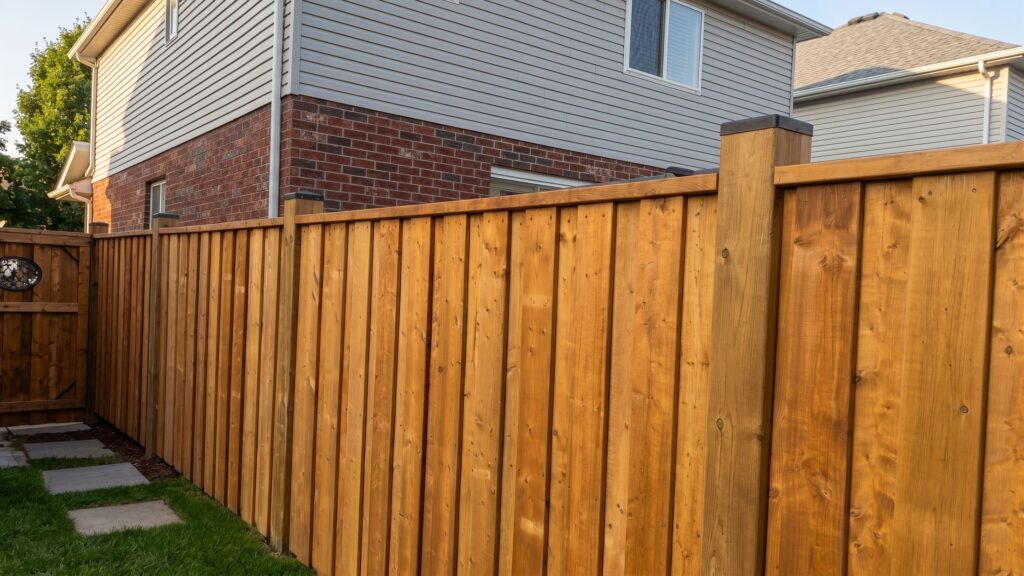
Coming in 2027: fence staining by Urban Fence and Deck. Ask about it when you get your fence quote, or call us if your current fence has gone grey.
We build pressure-treated and cedar fences across the GTA and Niagara, from Niagara Falls and St. Catharines to Burlington and Oakville. Not sure which wood to choose? Read cedar vs pressure-treated.
Planning a new fence? Call 437-922-9070 or request a free quote. We measure on site and send a clear, itemized price, usually within 24 hours. No deposit: you pay when the fence is done.
FAQ
Why is my new pressure-treated fence turning grey?
Sunlight breaks down the top layer of the wood and rain washes it away, leaving a silver-grey surface. It is normal and not rot. A pigmented stain slows it down.
How long should I wait to stain a new pressure-treated fence?
Until the wood is dry, not a fixed time. Sprinkle water on a board: if it soaks in within a few minutes, you can stain. If it beads, wait a few weeks and test again.
How often should a wood fence be stained?
Roughly every two to three years for a stained pressure-treated fence, sooner in full sun and later in shade.
Can you restore an old grey fence?
If the posts are solid, yes: replace damaged boards, clean the fence and apply a pigmented stain. If the posts are rotten, they need fixing first.


