

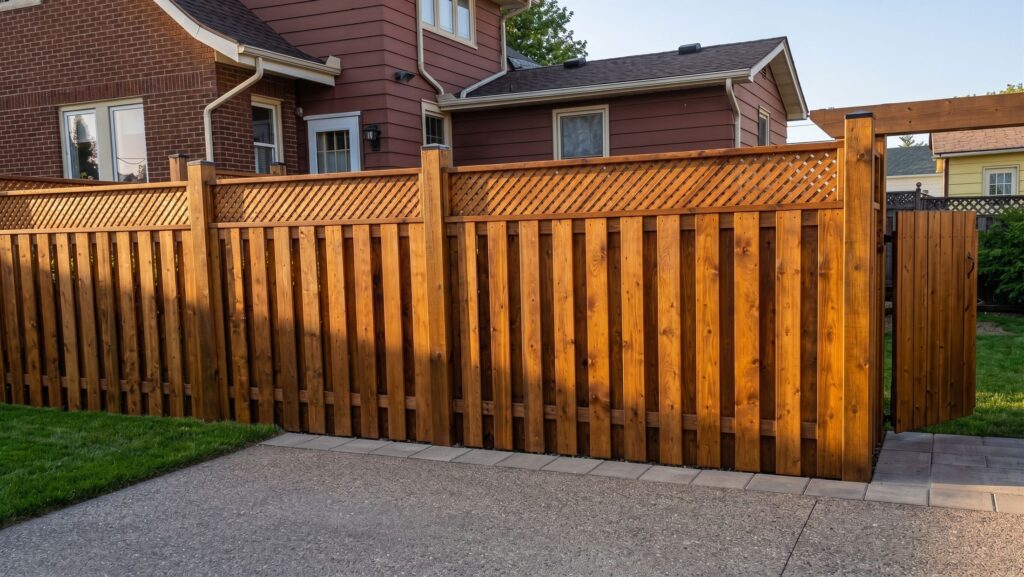
Cedar and pressure-treated pine are the two most popular woods for fences in Ontario. Both make a good privacy fence. The difference comes down to price, looks and how much you care about natural rot resistance. Here’s the honest comparison we give homeowners at every quote.
The Short Answer
Choose pressure-treated if you want the best value for a long, solid privacy fence. Choose cedar if you want a richer natural look and are happy to pay more for it. Either way, how the posts are set matters more than which boards you pick.
Side-by-Side Comparison
| Pressure-treated wood | Cedar | |
|---|---|---|
| Our starting price (2026) | From $55 per linear foot installed | From $67 per linear foot installed |
| Rot resistance | Treated with preservatives at the mill | Natural oils resist rot and insects |
| Look when new | Light, slightly green or honey tone | Warm reddish-brown with visible grain |
| Weight and feel | Heavier, very sturdy | Lighter, softer wood |
| Over time | Greys without stain | Also greys without stain |
| Upkeep | Stain every few years to keep the colour | Same — stain to keep the colour |
Pressure-Treated Wood: the Value Choice
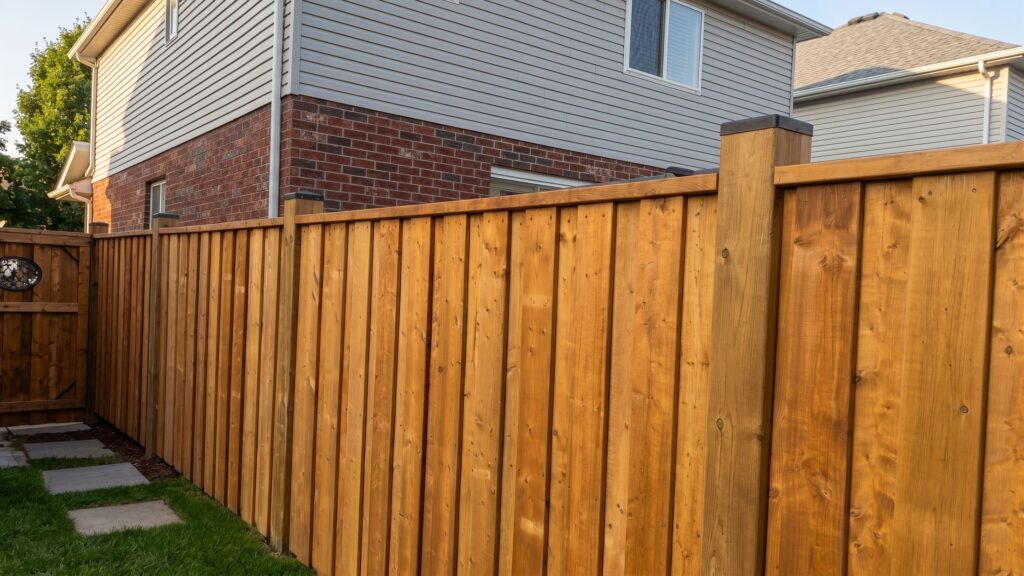
Pressure-treated pine is soaked with preservatives under pressure, which protects it from rot and insects. It’s strong, widely available and the most budget-friendly way to build a long privacy fence. Most of the fences we build in the GTA and Niagara are pressure-treated, like this privacy fence around a large backyard in Caledon.

Cedar: the Natural Look
Cedar has natural oils that help it resist rot and insects, a warm colour and a nice grain. It’s lighter and a little softer than treated pine. People choose it for looks — it suits older homes and gardens — and they pay more for it.
Both Turn Grey
A common surprise: cedar doesn’t keep its colour on its own. Without stain, both woods turn silver-grey in the sun within a couple of years. If you want to keep the colour, plan to stain either one. Read what your wood fence will look like after 1, 2 and 5 years.
What Matters More Than the Boards
Most wood fences don’t fail at the boards. They fail at the posts, right where the wood meets the ground and stays wet, and when the spring thaw pushes shallow posts out of line. That’s why we set every post below the frost line and protect it at ground level. A well-set pressure-treated fence will outlast a cedar fence on shallow, unprotected posts.
What About Composite?
If you never want to stain a fence, look at composite. It costs more up front, but it doesn’t rot, crack or need painting. Compare it in our wood vs composite guide.
We build both pressure-treated and cedar fences across the GTA and Niagara, including Hamilton, Burlington, Oakville, St. Catharines and Niagara Falls.
Not sure which wood to choose? Call 437-922-9070 or request a free quote. We measure on site and send a clear, itemized price, usually within 24 hours. No deposit: you pay when the fence is done.
FAQ
Is cedar better than pressure-treated wood for a fence?
Not better, different. Cedar has a richer look and natural rot resistance; pressure-treated wood is stronger and cheaper. For a long privacy fence on a budget, most homeowners choose pressure-treated.
How much more does a cedar fence cost?
Our cedar fences start from $67 per linear foot installed, compared with $55 for pressure-treated wood (2026 pricing).
Does cedar need to be stained?
If you want to keep its colour, yes. Without stain, cedar turns grey just like pressure-treated wood.
Which wood lasts longer in Ontario?
Both can last many years. How the posts are set — below the frost line and protected at the ground — matters more than the type of board.


